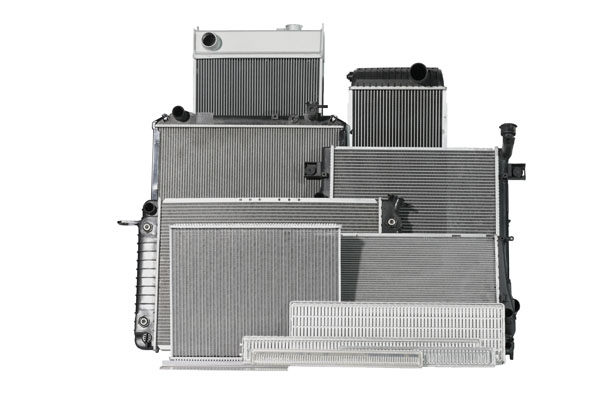
Your car's temperature gauge is climbing, and you're worried. You think it's the radiator, but what if the real problem is hiding somewhere else in the cooling system?
A car's poor cooling performance is often caused by more than just the radiator. The most common issues include a clogged radiator1, low coolant levels2, a non-working cooling fan3, or a faulty thermostat4. A full system check is needed to find the true source of the problem.
I see this all the time. A customer spends a lot of money to replace a radiator, only to find the overheating problem is still there. They feel frustrated and think they bought a bad part. But the truth is, the cooling system5 is a team of parts working together. If one player is out, the whole team suffers. Before you blame the radiator, you need to look at the entire system. Let's break down the real reasons your car might be overheating.
Could a Clogged Radiator Be the Real Problem?
Your engine temperature is rising, especially on the highway. You fear getting stuck on the side of the road. A quick inspection can tell you if a blockage is the cause.
Yes, a radiator can be the problem if it's clogged. Blockages can happen on the outside from things like bugs and dirt, or on the inside from rust and sludge. Both types of clogs stop air and coolant from flowing freely, which makes the engine overheat.
Let's dive deeper into this. I've seen radiators that look fine from a distance but are completely blocked up close. You have to understand there are two types of clogs, and they have different causes.
External Blockage
This is the easiest to spot. Over time, the front of the radiator collects all sorts of things from the road. I once had a customer whose truck kept overheating. We checked everything, and it all seemed fine. Then, I took a flashlight and looked between the A/C condenser and the radiator. It was completely packed with years of dirt and leaves. The air simply couldn't get through. This is very common for trucks and farm equipment that work in dusty conditions.
Internal Blockage
This one is harder to see. It happens when you use the wrong type of coolant or, even worse, just plain tap water. Minerals in the water create scale and rust inside the tiny tubes of the radiator. This sludge builds up and restricts the flow of coolant. It's like trying to drink a thick milkshake through a tiny straw. The coolant can't move fast enough to carry the heat away from the engine.
| Type of Clog | Common Symptoms | How to Check |
|---|---|---|
| External | Overheats at high speeds or when A/C is on. | Use a flashlight to inspect the fins for debris. |
| Internal | Constant overheating that gets worse over time. | Check coolant for a rusty or sludgy appearance. |
So, before you decide the radiator itself has failed, make sure it's clean both inside and out. A simple cleaning can sometimes solve the entire problem.
Is a Faulty Fan Causing Your Car to Overheat in Traffic?
You're stuck in stop-and-go traffic, and you notice the temperature needle start to climb. The fear of breaking down in the middle of a busy street is real.
Yes, a faulty cooling fan is a very common reason for overheating in slow traffic or at a standstill. When the car isn't moving, there's no natural airflow through the radiator. The fan's job is to pull air through, and if it fails, the temperature will quickly rise.
Let's look at this more closely. The cooling fan is critical for city driving. When you're driving on the highway, the speed of the car forces enough air through the radiator to keep the engine cool. But when you slow down or stop, that airflow disappears. That's when the fan is supposed to turn on and take over. If it doesn't, you have a problem.
I remember a client with a passenger car who swore his car was fine on his long commute but would start to overheat the second he got into town. He thought his new radiator was defective. I told him to start the car and let it run while we watched.
How to Diagnose a Bad Fan
- Let the engine warm up. Start the car and let it idle. Keep an eye on the temperature gauge6.
- Wait for the trigger point. Most cars will turn on the fan when the temperature reaches the middle of the gauge, or around 90-100°C (195-212°F).
- Listen and look. You should hear the fan kick on. It's a noticeable whirring sound. You can also look to see if the fan blades are spinning.
- Turn on the A/C. In most cars, turning on the air conditioning will automatically force the cooling fan to run, even if the engine isn't hot. This is a great and easy test.
If the fan doesn't turn on in either of these tests, you've likely found your culprit. The issue could be a bad fan motor, a blown fuse, a faulty relay, or a broken temperature sensor. It's not a radiator problem, but it directly affects the radiator's ability to do its job.
What Happens When Your Thermostat Gets Stuck?
Your car's temperature gauge is behaving strangely. It either takes forever to warm up or it suddenly shoots into the red zone. This unpredictability is stressful and dangerous for your engine.
A faulty thermostat is a very common cause of cooling system problems. If it gets stuck closed, the engine will overheat very quickly. If it gets stuck open, the engine will take too long to reach its proper operating temperature, which hurts fuel economy and performance.
The thermostat is like a gatekeeper for your coolant. Its job is simple. It stays closed when the engine is cold to help it warm up quickly. This is called the "small circulation." Once the engine reaches its ideal temperature (usually around 85-95°C), the thermostat opens. This allows coolant to flow to the radiator to be cooled down. This is the "big circulation."
A problem happens when this little part fails. I've seen it go both ways, and both are bad for your vehicle.
Stuck Closed
This is the most dangerous failure. The thermostat never opens. Coolant can't get to the radiator to be cooled. The engine's heat just builds and builds until it overheats. This can cause serious damage like a warped cylinder head. A key symptom is that the upper radiator hose will get extremely hot, but the lower hose will stay cool, because no hot coolant is circulating through the radiator.
Stuck Open
This is less dangerous but still a problem. The thermostat never closes. Coolant flows to the radiator all the time, even when the engine is cold. As a result, the engine takes a very long time to warm up, especially in winter. Your heater won't blow hot air, and your fuel efficiency will drop because the engine isn't running at its optimal temperature.
| Thermostat State | Symptom | Risk Level |
|---|---|---|
| Stuck Closed | Engine overheats very quickly. | High - Can cause major engine damage. |
| Stuck Open | Engine takes forever to warm up; poor heating. | Low - Affects efficiency and comfort. |
A thermostat is a cheap part, but it plays a huge role. If you suspect it's the problem, it's often best to just replace it. It's a simple fix that can prevent a very expensive engine repair down the road.
Conclusion
Proper engine cooling depends on the entire system working together. A quick, step-by-step diagnosis is the best way to find the real issue and avoid wasting money on unneeded parts.
About Siri heat exchanger
Siri heat exchanger is a cooling system manufacturer with over 20 years of OEM/ODM experience, based in China. Our market reach extends to more than 60 countries. We sell our own brand, "SIRI," and also support custom brand packaging. The workers on our production lines have 5, or even 10, years of experience, ensuring stable quality.
Our Services
- From Concept to Production: A one-stop manufacturing solution.
- Warranty Period: We can offer a 12-month warranty on our products.
- International Certifications: We meet ISO9001, ISO/TS 16949, and ISO14001 standards.
Product and Service Scope
- Monthly Production Capacity: Siri can produce 3,000 units of plate-fin oil coolers and 100,000 units of tube-fin aluminum radiators and intercoolers per month.
- Product Line Coverage: Our product line covers cooling system products for passenger cars, heavy-duty trucks, agricultural machinery, generator sets, air compressors, and construction machinery.
- Flexible Solutions: We offer customized solutions based on client needs to enhance their market competitiveness.
Global Impact
We serve customers worldwide, providing reliable products and custom solutions that help grow their business and build customer trust.
Understanding the symptoms of a clogged radiator can help you diagnose cooling issues before they escalate. ↩
Maintaining proper coolant levels is crucial for engine health; learn how to check them effectively. ↩
Learn how a cooling fan operates to keep your engine cool, especially in stop-and-go traffic. ↩
Identifying a faulty thermostat early can prevent serious engine damage and costly repairs. ↩
Familiarizing yourself with the cooling system components can help you troubleshoot issues effectively. ↩
Understanding your temperature gauge can help you monitor your engine's health and prevent overheating. ↩