Your radiator is aging. Coolant problems appear. How long will it last?
With proper maintenance, car radiators typically last 5-8 years or 100,000-150,000 km. All-aluminum radiators can last 8-12 years or more. Regular coolant changes and proper care significantly extend radiator life.
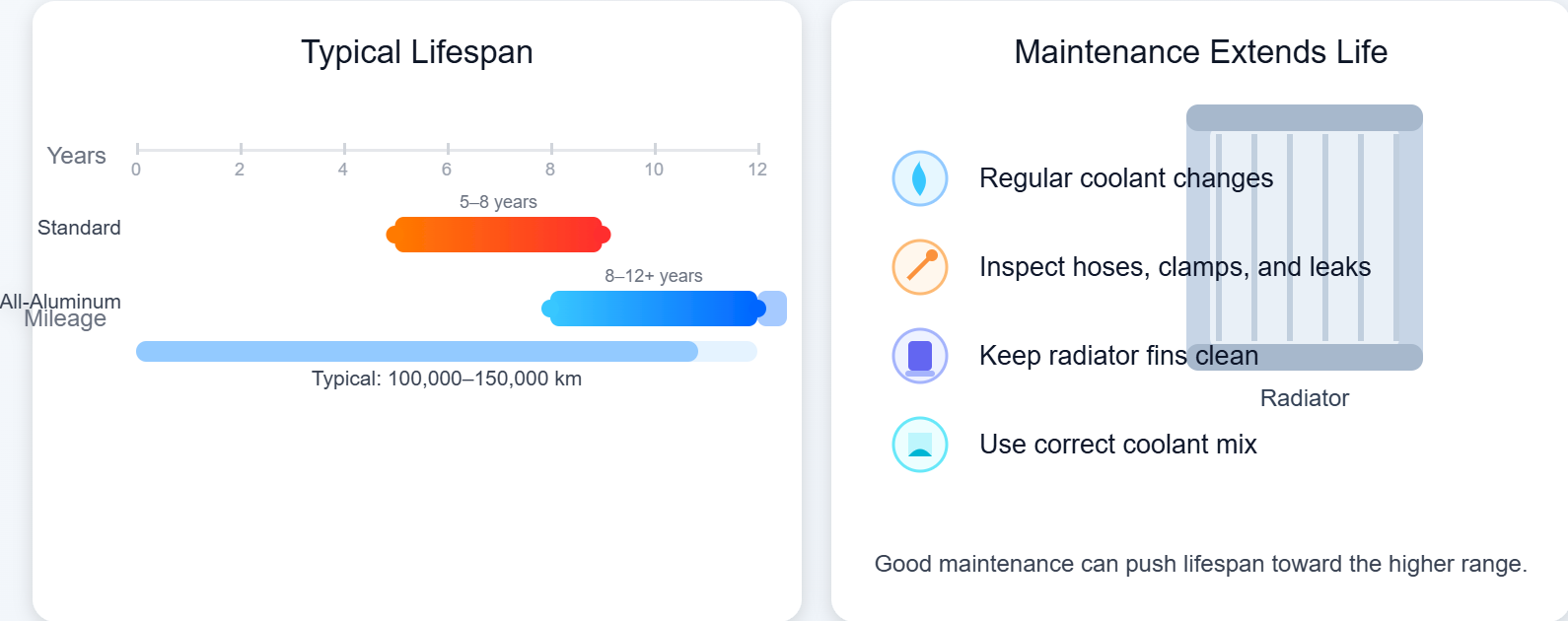
I've seen many radiators fail prematurely due to neglect. Some have lasted well beyond expectations with proper care. Understanding what affects radiator lifespan can help you make the right decisions about maintenance and replacement.
What Factors Affect How Long a Radiator Lasts?
Your radiator ages fast. Why does this happen? What causes early failure?
Key factors affecting radiator lifespan include coolant maintenance, operating conditions, environmental factors, electrochemical corrosion, and quality of materials. Proper coolant changes and avoiding harsh conditions significantly extend radiator service life.
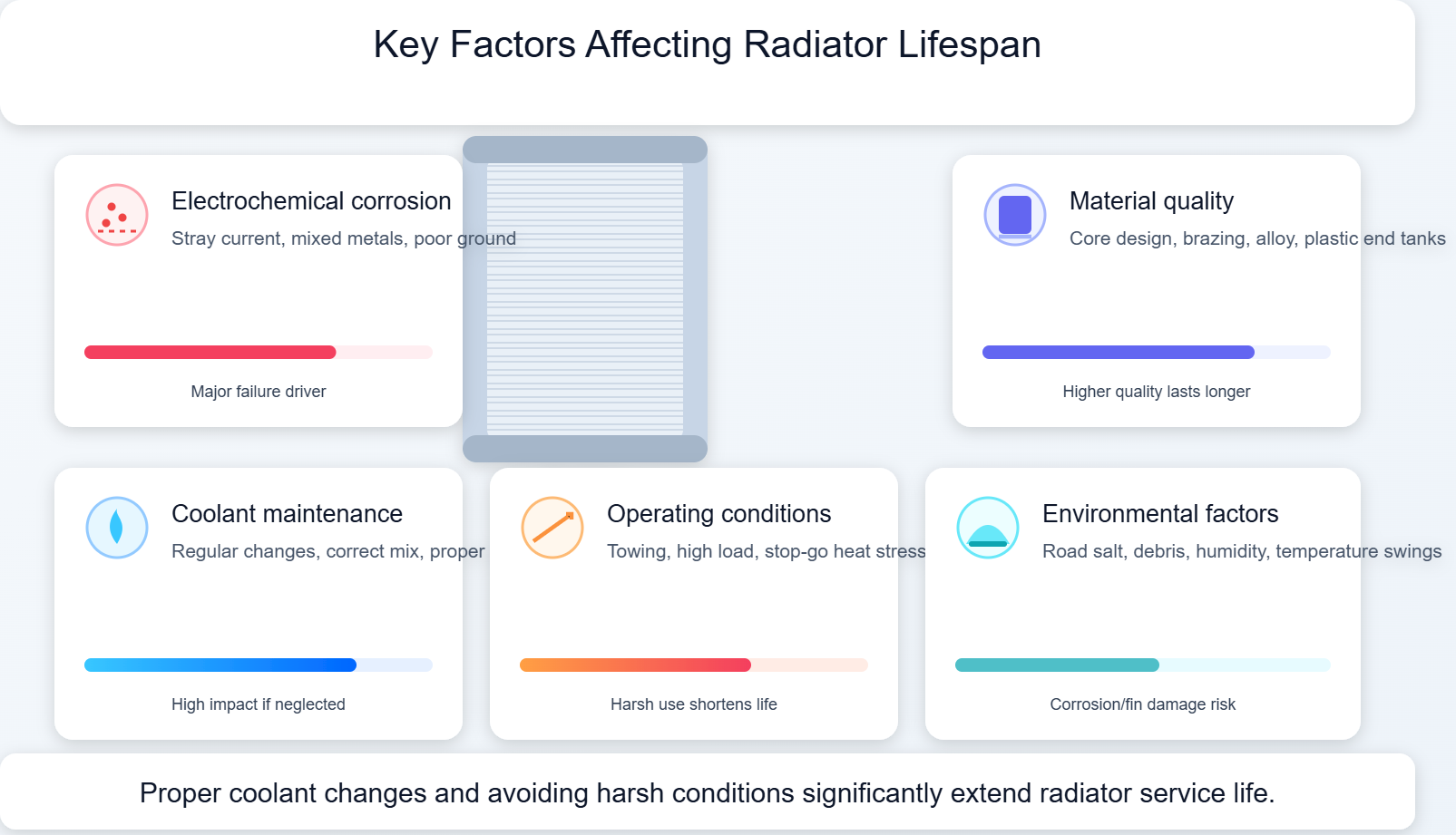
Let's talk about why radiators fail and what you can do about it. Coolant maintenance is the most important factor. I learned this lesson the hard way when I neglected to change the coolant in my truck for too long. The result? A corroded radiator that needed replacement much sooner than expected.
Coolant has additives that protect your radiator. These additives break down over time. When they do, corrosion can start. The inside of your radiator begins to deteriorate. Small particles can clog the narrow cooling passages. This reduces efficiency and causes overheating.
Operating conditions also matter a lot. If you frequently drive in stop-and-go traffic, your radiator works harder. City driving with lots of idling creates more heat. Towing heavy loads puts extra strain on the cooling system. Mountain driving with lots of climbing also increases stress.
Environmental factors play a role too. If you live in a coastal area, salt air can cause corrosion. Winter road salt accelerates rust. Bugs and debris can clog the fins, reducing airflow. Hitting a rock on the highway can damage the fins too.
Here's a table showing factors that affect radiator lifespan:
| Factor | Impact on Lifespan | How to Mitigate |
|---|---|---|
| Coolant Maintenance | High importance | Follow manufacturer's schedule for coolant changes |
| Operating Conditions | Medium impact | Avoid excessive idling when possible |
| Environmental Factors | Medium impact | Regular cleaning of radiator fins, especially in bug-prone areas |
| Electrochemical Corrosion | Medium impact | Ensure proper grounding and electrical connections |
| Quality of Materials | High importance | Choose quality radiators from reputable manufacturers |
I remember a customer who complained about radiator failures. His truck kept overheating. After inspection, we found poor electrical connections causing stray currents. These currents created electrolysis that ate through the radiator. Fixing the electrical problem solved his recurring radiator issues.
Quality of materials makes a big difference too. Cheaper radiators often use thinner metal. They may not have proper internal baffles. The welding might not be as good. All these factors can lead to premature failure. A good quality radiator costs more initially but lasts longer.
What Are the Signs That My Radiator Is Near the End of Its Life?
Your radiator fails soon. Warning signs appear. What should you look for?
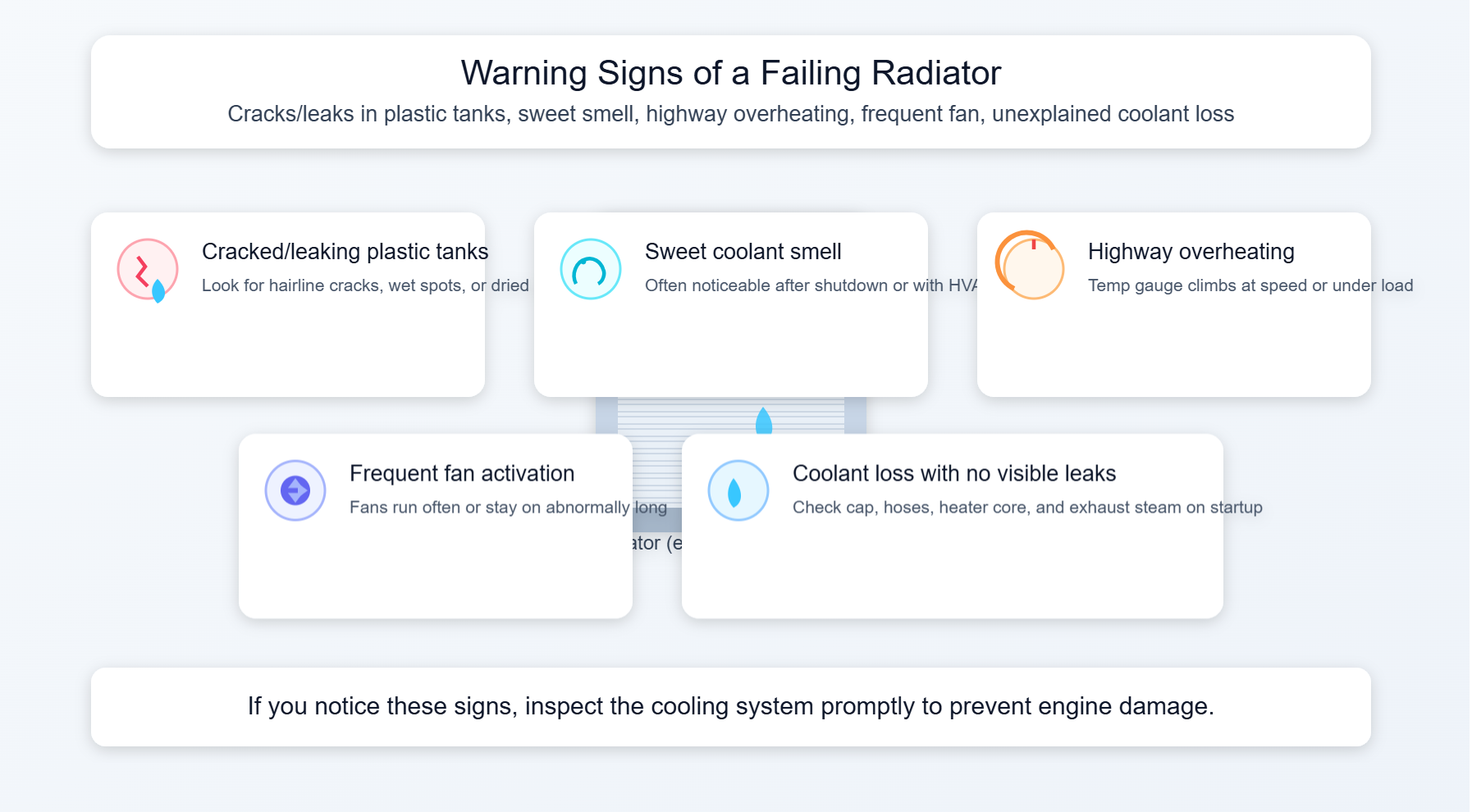
Warning signs of a failing radiator include plastic water chambers cracking or leaking, sweet smell from coolant, overheating at highway speeds, frequent fan activation, and mysterious coolant loss with no visible leaks.
Recognizing the signs of a failing radiator can save you from being stranded on the road. It can also prevent expensive engine damage. Let's explore what to watch for.
Plastic water chambers are common failure points. These are the tanks at the ends of your radiator. They hold the coolant. Over time, plastic can become brittle. Cracks may develop. You might see coolant weeping from these cracks. Sometimes, you'll find white crystalline deposits. This is dried coolant. It often has a sweet smell. I've had friends who noticed this sweet odor in their garage. They ignored it until their radiator leaked all over the floor.
Cooling fins are another area to watch. These are the thin aluminum strips between the coolant tubes. They help dissipate heat. When fins corrode, they can break off. They may get clogged with bugs, dirt, or road debris. This reduces cooling efficiency. You might not see this without removing the grille. But you can notice symptoms like overheating when driving fast.
Temperature gauge behavior is important too. If your temperature runs higher than normal, that's a warning sign. The fan running more frequently than before is another clue. Some vehicles have dashboard warning lights for overheating. Don't ignore these alerts.
Here's a table showing common radiator failure symptoms and their possible causes:
| Symptom | Possible Cause | What It Means |
|---|---|---|
| Sweet smell from engine bay | Coolant leak | Cooling system integrity compromised |
| Overheating at highway speeds | Clogged cooling fins | Reduced heat dissipation efficiency |
| White crystalline deposits | Coolant evaporation from slow leak | Small, persistent leak exists |
| Frequent fan activation | Reduced cooling efficiency | Radiator not cooling properly |
| Coolant loss without visible leaks | Internal leak or evaporation | Problem may not be obvious at first |
| Discolored or sludgy coolant | Corrosion inside system | Chemical breakdown occurring |
I remember one customer who kept adding coolant but never saw leaks. His car would overheat after 30 minutes of driving. After some investigation, we found a small crack in one of the plastic tanks. It only leaked under pressure when hot. This type of problem can be hard to detect. That's why monitoring coolant levels is important.
Another sign is debris in the expansion tank. If you find muddy or oily deposits, that could indicate internal corrosion. This sludge can clog the small passages in the radiator. It reduces coolant flow. This leads to overheating.
If you notice any of these signs, don't wait too long. A radiator failure can cause your engine to overheat quickly. This can lead to warped heads, blown head gaskets, or even seized engines. These repairs cost much more than a new radiator.
How Can I Extend the Life of My Radiator?
Your radiator lasts longer. Simple steps help. What can you do?
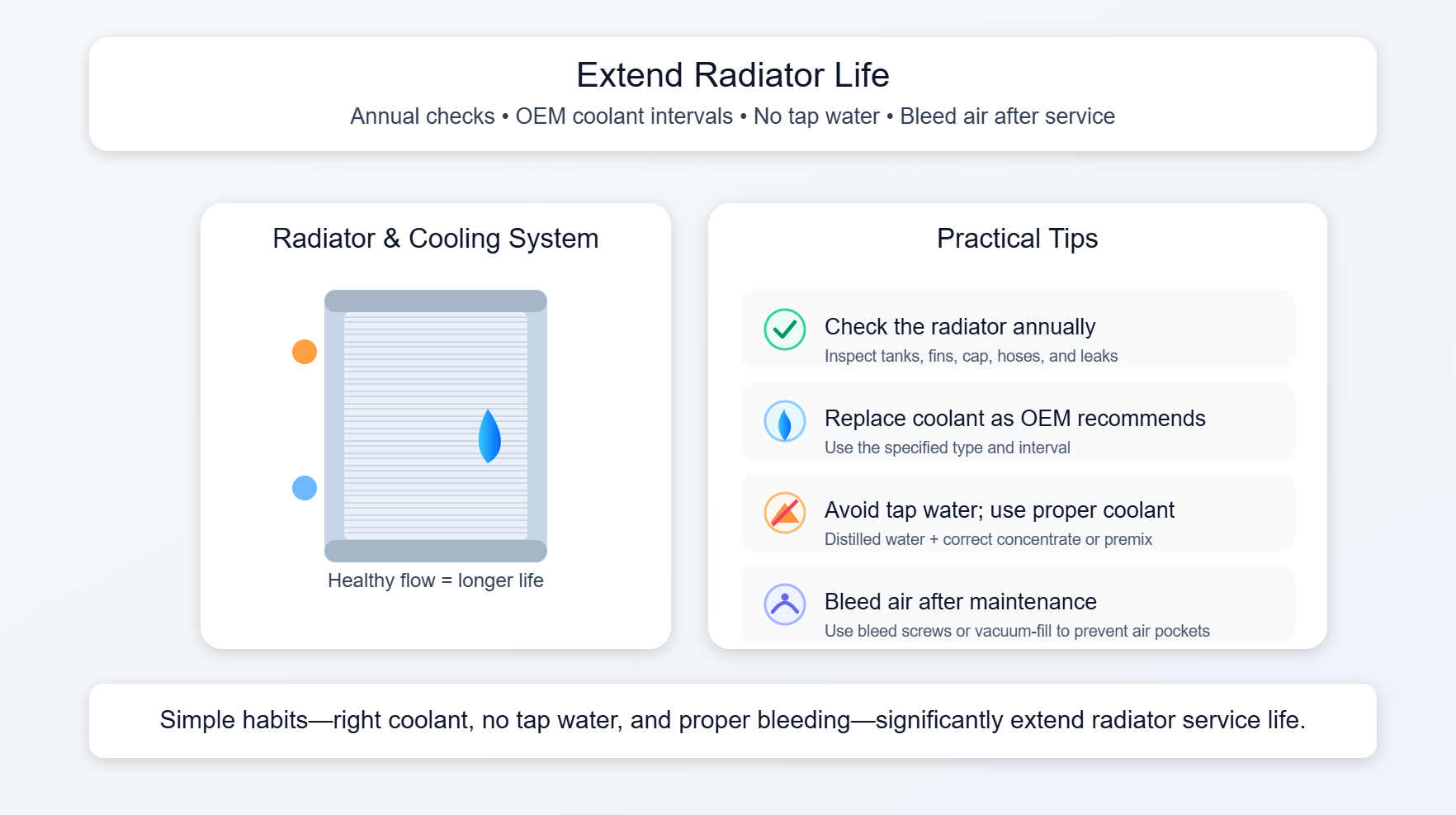
To extend radiator life, check it annually, replace coolant as recommended by your manufacturer, avoid using tap water instead of proper coolant, and ensure the cooling system is properly bled of air after maintenance.
Taking care of your radiator doesn't have to be complicated. A few simple habits can significantly extend its life. I learned these lessons through both personal experience and helping customers with their cooling systems.
First, make annual radiator inspections part of your routine. Look for any signs of leaks. Check the hoses for cracks or bulges. Examine the fins for damage. Make sure the fan is working properly. Early detection of problems can prevent bigger issues later. I've seen many radiators saved from complete failure by catching small leaks early.
Coolant maintenance is crucial. Many people ignore this until they have a problem. Coolant contains additives that protect your cooling system. These additives break down over time. That's why manufacturers recommend replacement every 30,000 to 100,000 miles. The exact interval depends on your vehicle and the type of coolant used. I always tell people to follow their car manufacturer's recommendations.
Never use tap water in your cooling system as a permanent solution. Water alone causes corrosion. It also freezes at 32°F (0°C). Proper coolant has additives that prevent freezing and boiling. It also contains corrosion inhibitors. I once had a customer who used only water to save money. His radiator was completely corroded within two years. The repair cost far exceeded what he would have spent on proper coolant.
Proper bleeding of the cooling system after service is important too. Air pockets can form during coolant changes. These pockets prevent proper coolant flow. They can cause hot spots that damage the radiator. Some cars have special bleed screws to make this easier. Others require specific procedures to get all the air out.
Here's a table with tips for extending radiator life:
| Maintenance Task | Recommended Frequency | Benefits |
|---|---|---|
| Coolant replacement | Every 30,000-100,000 miles (check manual) | Prevents corrosion, maintains proper freezing/boiling points |
| Radiator inspection | Annually | Early detection of leaks, damage, or corrosion |
| Hose replacement | Every 4-6 years or as needed | Prevents unexpected failures and coolant loss |
| Thermostat check | Every 2 years or with symptoms | Ensures proper operating temperature |
| System pressure test | As needed when overheating occurs | Identifies leaks that aren't visible when cold |
| Cooling system flush | Every 2-5 years (check manual) | Removes contaminants and replenishes additives |
I remember one customer whose car kept overheating. We couldn't find any obvious leaks or problems. Finally, we discovered air in the cooling system. Someone had worked on it previously and didn't properly bleed it. After removing the air, the temperature returned to normal. That simple fix saved him from a costly radiator replacement.
For vehicles over 8 years old, consider preventive radiator replacement. This is especially true if you see signs of aging or minor leaks. Replacing the radiator before it completely fails can prevent engine damage. It also reduces the chance of being stranded.
Conclusion
Take care of your radiator. It will last longer. Regular maintenance saves money.